Sewer Line Failure Warning Signs for Rhode Island Homes
Neal Lund
Quick Summary:
Rhode Island homeowners should act quickly if they notice a sewage smell in the yard, whole-house drain backups, wet patches in the lawn, or gurgling sounds from toilets and drains. These symptoms can point to a damaged or blocked sewer lateral—the pipe that carries wastewater from your home to the public sewer. A prompt camera inspection can identify the cause and help prevent a messy, expensive backup.
A sewer line problem rarely starts with a dramatic collapse. More often, it begins with small, easy-to-dismiss changes: a drain that needs plunging more often, a toilet that bubbles when the washing machine runs, or an unpleasant odor outside after a rainy day. For homeowners in Providence, RI, and throughout Rhode Island, recognizing the warning signs early can make the difference between a targeted repair and a major emergency.
1. Sewage Smell in the Yard
A persistent sewage or sulfur-like smell outdoors is one of the clearest signs that wastewater may be escaping from an underground sewer line. The odor may be strongest near the route between the house and the street, around a driveway, or near low spots in the yard.
A cracked pipe, separated joint, or partial collapse can allow sewer gases and wastewater to seep into surrounding soil. This is not a problem to cover up with landscaping or air freshener—it deserves a professional inspection. F.G. Lees & Son can evaluate the line and determine whether the issue is a blockage, root intrusion, or a damaged section of pipe.
2. Whole-House Drain Backups
One slow sink may be a local drain clog. But when several fixtures back up at once—such as a toilet bubbling while the shower drains slowly—the issue is more likely in the main sewer line. A whole-house backup is especially concerning when water or sewage appears in a basement floor drain, tub, or shower after running another fixture.
Do not keep running water to “test” the problem. Added water can quickly turn a partial blockage into an indoor sewage backup. Professional Drain Cleaning
may clear a buildup, but a camera inspection is often the next important step to confirm whether the pipe itself has a structural defect.
3. Wet Patches or Unusually Green Lawn Areas
Unexpected wet patches, soft soil, or unusually lush strips of grass can signal a sewer line leak. Wastewater escaping underground adds moisture and nutrients to the soil, sometimes causing grass to grow faster or look greener in a narrow path.
In Rhode Island, seasonal rain and snowmelt can make lawn moisture harder to interpret. Still, if a wet area persists during dry weather or returns repeatedly in the same spot, it should be investigated. F.G. Lees & Son helps Providence homeowners distinguish between a drainage issue and a failing sewer lateral before the ground becomes unstable or sewage reaches the surface.
4. Gurgling Sounds From Toilets and Drains
Gurgling is your plumbing system telling you that air is not moving normally. When a sewer line is restricted by roots, debris, scale buildup, or a shifted joint, wastewater can struggle to pass through. That restriction creates pressure changes that cause toilets, sinks, and tubs to make bubbling or gurgling sounds.
These sounds are often most noticeable when using high-volume fixtures, such as a washing machine, dishwasher, or shower. If the noise occurs in multiple parts of the home, it is wise to schedule a sewer camera inspection rather than relying on repeated plunging or chemical drain products.
Why Older Providence Sewer Laterals Need Extra Attention
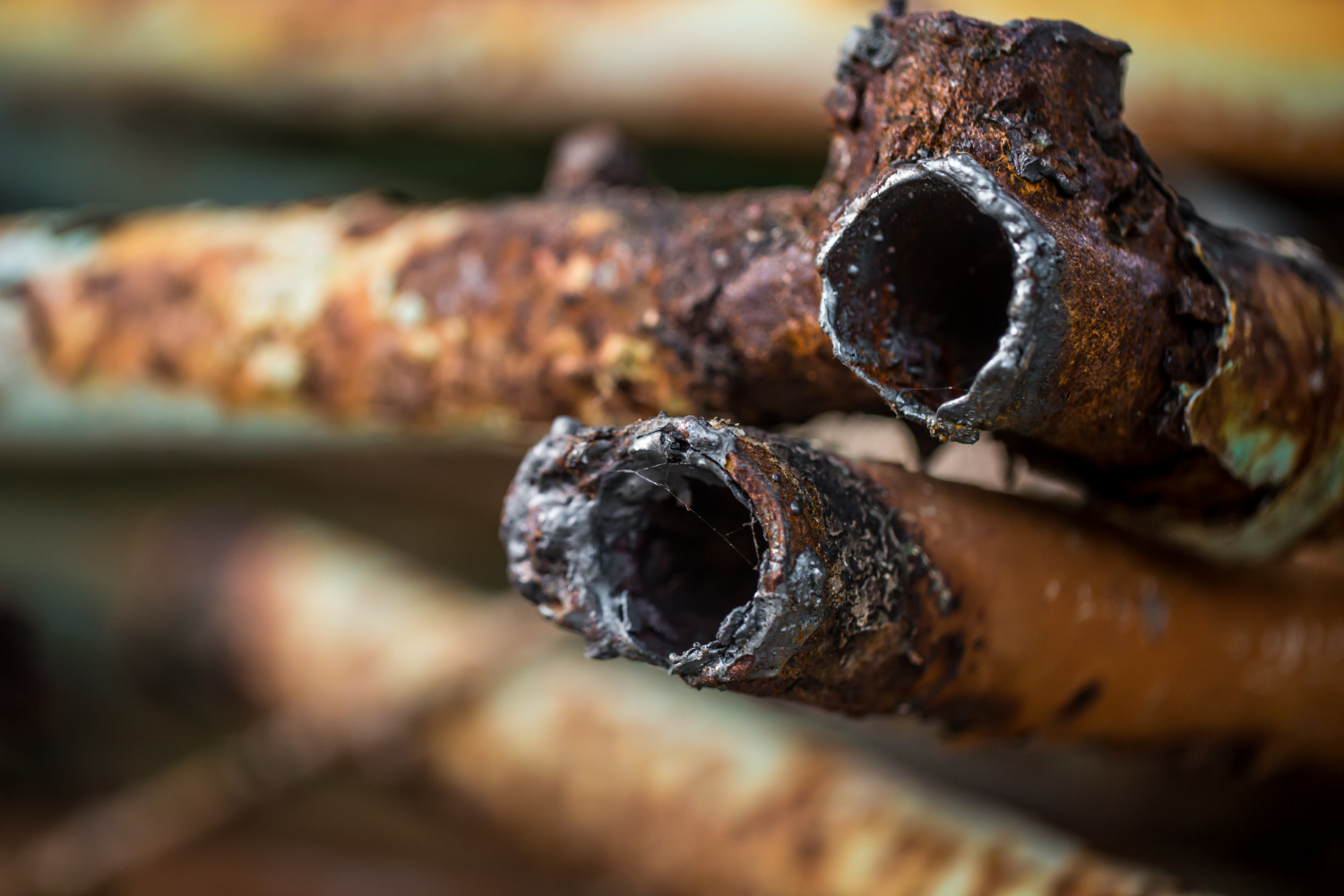
Many properties in Providence, RI, have older sewer laterals made from clay tile or cast iron. Both materials can provide years of service, but age, ground movement, and tree roots can create weaknesses over time. Clay pipe sections are joined together, and those joints can separate or shift. Cast iron can corrode internally, develop rough scaling, or crack as it ages.
Root intrusion is particularly common where roots sense moisture escaping through tiny gaps at pipe joints. Once roots enter, they can expand inside the line, catch toilet paper and debris, and create recurring blockages. Joint offset is another concern: when sections of pipe no longer line up correctly, wastewater and solids can snag at the uneven connection. These conditions are why recurring sewer backups in older Rhode Island homes should be diagnosed, not simply cleared.
What a Sewer Camera Inspection Looks For
A sewer camera inspection is a straightforward way to see what is happening inside a buried pipe without guessing. A trained technician feeds a flexible, waterproof camera through an accessible drain or cleanout. The live video shows the inside of the sewer line and helps locate roots, cracks, heavy corrosion, bellies in the pipe, separated joints, blockages, and collapsed sections.
The camera also helps identify the location and depth of a problem area, which is valuable if repair is needed. Instead of excavating a large section of yard based on assumptions, F.G. Lees & Son can use the inspection findings to recommend the most appropriate next step. For damaged lines, learn more about our Sewer Line Repair
services.
Understanding the Excavation Process
When a sewer line has a break, severe root damage, major joint offset, or collapse, excavation may be the most reliable solution. In plain language, excavation means carefully digging down to reach the failed portion of pipe, removing the damaged material, installing a properly connected replacement section, testing the repair, and restoring the area as practical.
F.G. Lees & Son performs all excavation in-house with no subcontractors. Because we own and operate our excavation equipment, our team can manage the sewer repair process from diagnosis through excavation and repair. That gives Rhode Island homeowners one experienced team to work with rather than multiple companies trying to coordinate a time-sensitive plumbing problem.
When to Call for Help
Call promptly if sewage is backing up indoors, a toilet or drain gurgles repeatedly, multiple drains are slow, or you notice sewage odor or wet ground outside. Early action can reduce property damage, protect indoor air quality, and help avoid disruption to your home and yard.
As Rhode Island’s longest-running plumbing company, F.G. Lees & Son has served Providence and surrounding communities since 1889. Our team brings practical experience with the older plumbing systems found throughout Rhode Island, including homes with aging clay and cast iron sewer laterals.
FAQ
Can a sewer line problem cause only one drain to clog?
It can, but one isolated clog is more often caused by a problem in that fixture’s branch drain. When several fixtures are affected, the main sewer line becomes more likely.
Will drain cleaning fix roots in a sewer line?
Drain cleaning can remove some root growth and restore flow temporarily. However, if roots entered through damaged joints or cracks, the underlying pipe condition should be evaluated with a camera inspection.
How do I know whether I need excavation?
A camera inspection provides the clearest answer. Excavation may be recommended for a collapsed pipe, extensive break, severe offset, or other structural damage that cannot be reliably resolved by cleaning alone.
Are sewer line failures common in older Rhode Island homes?
Older homes can be more vulnerable because their sewer laterals may contain aging clay or cast iron pipe. Roots, corrosion, shifting soil, and old joints all increase the likelihood of problems over time.
What should I do while waiting for a sewer inspection?
Limit water use as much as possible. Avoid running the washing machine, dishwasher, or multiple fixtures, especially if there are signs of a main-line backup.
If you have noticed any of these warning signs, schedule a sewer camera inspection with F.G. Lees & Son today. We will help you understand what is happening underground and recommend a clear path toward a dependable repair for your Providence, RI, or Rhode Island home.