
We Own the Equipment. We Do the Work.
When underground pipe fails, the last thing you need is a plumber who calls a separate excavation company, who calls a utility locator, who calls someone else to pull permits. F.G. Lees & Son owns its excavation equipment and handles every phase of the job — diagnosis, permitting, digging, pipe repair or replacement, backfill, and site restoration — with one crew and one point of contact.
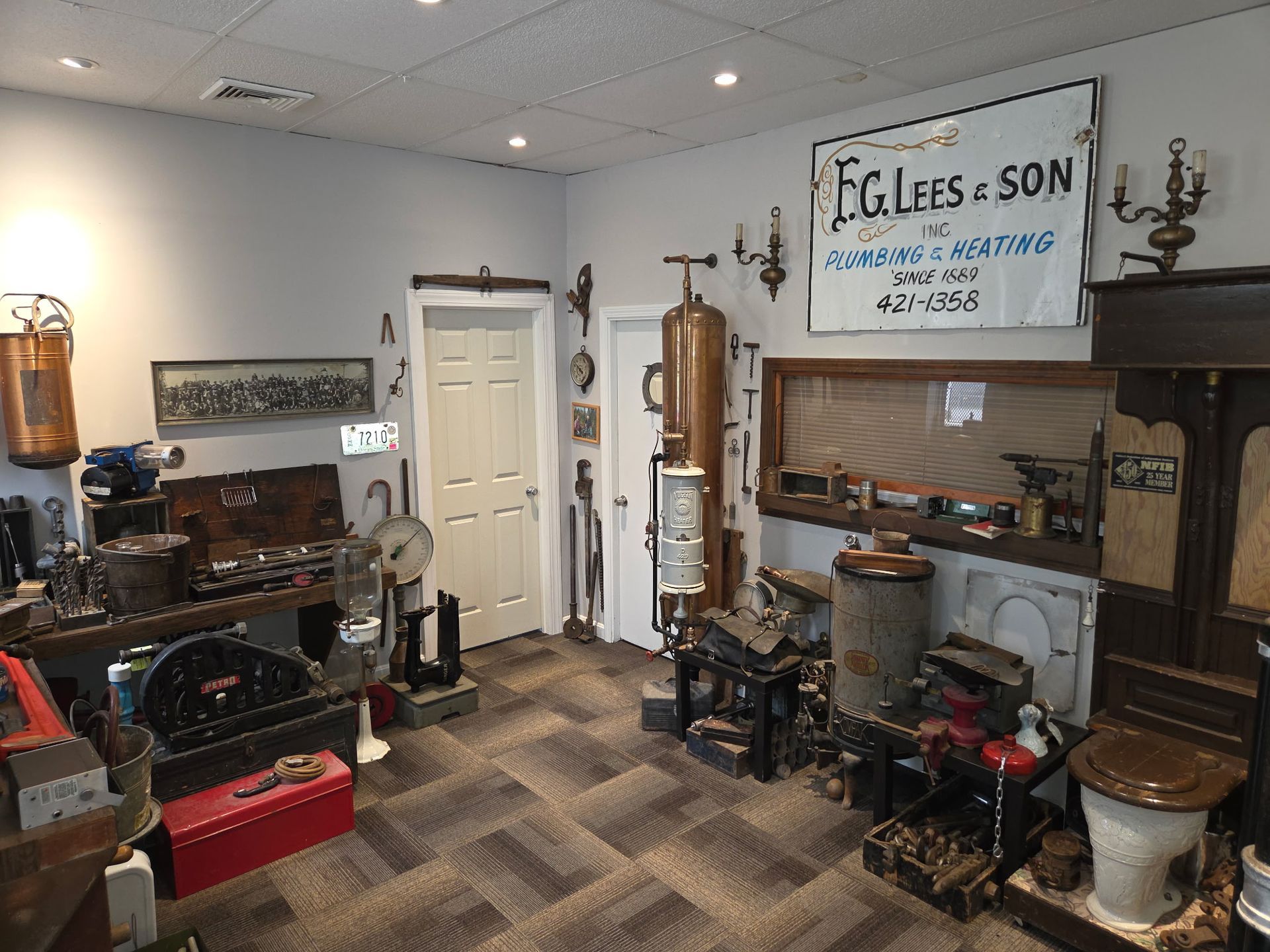
That's been true since 1889. It's still true today.
Rhode Island's underground infrastructure is aging. Clay sewer laterals, galvanized water mains, and pre-war pipe systems are common across Providence, Warwick, East Providence, North Providence, and Lincoln. Excavation isn't a worst-case scenario here — it's a routine part of keeping older homes and buildings running.
What Excavation Plumbing Actually Covers
Most visitors arrive here because something is wrong underground — a backed-up sewer, a water main leak, a pipe that's been failing for years in a Providence home built before World War II. Excavation plumbing is the process of accessing those buried lines to inspect, repair, or replace them.
We handle two primary underground systems:
- Sewer line excavation — for cracked, collapsed, root-infiltrated, or failed sewer laterals connecting your home or building to the municipal system
- Water line excavation — for corroded, leaking, or broken water mains running from the street to your property
If you already know which system is the problem, you can go deeper on either service page.
How a Sewer or Water Line Excavation Works
Most homeowners have never had underground excavation done. The process is straightforward when handled by one experienced crew — here's exactly what to expect.
Step 1: Camera Inspection and Scope Assessment
Before any equipment moves, we run a camera through the affected line to locate the problem, document its condition, and determine the precise area that needs to be addressed. You see what we see. No guessing, no unnecessary digging.
Step 2: Utility Marking and Permit Coordination
We notify Dig Safe and coordinate with Rhode Island utility providers to mark all underground lines in the work area. We also pull every required permit with the city or municipality — Providence, Warwick, Lincoln, East Providence, North Providence, and surrounding communities each have their own requirements, and we handle that coordination entirely. You don't navigate city hall. We do.
Step 3: Controlled Excavation
Our crew digs to the affected pipe using our own backhoe and trenching equipment. We dig only where the camera and utility markings tell us to — no wider, no deeper than the job requires.
Step 4: Pipe Repair or Replacement
With the line exposed, we repair or replace the damaged section using materials and methods appropriate to the pipe type, depth, and surrounding conditions. If a full replacement is warranted, we scope it and price it before the first shovel goes in.
Frequently Asked Questions About Excavation Plumbing in Rhode Island
Who does sewer line excavation in Providence, RI?
F.G. Lees & Son has performed sewer and water line excavation across Providence and Rhode Island since 1889. We own our excavation equipment and perform all underground work with our own licensed plumbing crew — no subcontractors involved at any stage of the job.Does F.G. Lees do their own excavation?
Yes. We own our backhoes and trenching equipment and keep all excavation work in-house. Every phase — camera inspection, utility marking, permitting, digging, pipe repair, and site restoration — is handled by our crew. You work with one company from start to finish.How long does a sewer line excavation take in Rhode Island?
Most residential sewer line excavations in Providence and surrounding communities are completed in one to two days once permits are in place. Permit timelines vary by municipality. We coordinate all permit applications and utility notifications as part of the job, and we give you a realistic timeline before any work begins.What's the difference between trenchless repair and excavation?
Trenchless methods repair a pipe from the inside using lining or pipe-bursting equipment — no open trench required when conditions allow. Traditional excavation involves digging to expose the pipe directly, which is necessary when the pipe has collapsed, when trenchless access points aren't available, or when the damage is too extensive for lining. We camera-inspect every line before recommending an approach, and we'll tell you honestly which method fits your situation. Do I need a permit for sewer or water line excavation in Providence? Yes. Excavation work affecting sewer or water lines in Providence and most Rhode Island municipalities requires permits and Dig Safe notification before digging begins. F.G. Lees & Son handles all permit applications and utility coordination as part of every job — this is not something you need to manage on your side.
Ready to Find Out What's Happening Underground?
Trenchless methods — pipe lining and pipe bursting — can repair certain failed lines without open digging. We assess trenchless options on every job where the pipe location and condition allow for it.
The camera inspection tells us which approach is appropriate. Trenchless works well for lines with consistent damage along a run in accessible soil. Excavation is the right call when the pipe has collapsed, when access points aren't viable for lining equipment, or when the line runs under a structure that limits trenchless options.
We recommend the method that solves the problem correctly — not the one that's faster to sell.