
Water Line Repair and Replacement in Rhode Island
If you're seeing a spike in your water bill, losing pressure throughout the house, or noticing wet patches in your yard that have nothing to do with rain, the problem is likely your water service line — the pipe that runs from the city main at the street to your home. This page covers water line repair and replacement specifically. If you're dealing with slow drains, sewage odors, or backup issues, that's a separate system entirely.
Water line problems don't resolve on their own. A slow leak under your yard will keep climbing your water bill until the line is repaired or replaced — and in older Rhode Island homes, the original service line may be undersized, deteriorated, or made of lead. F.G. Lees has been diagnosing and replacing water service lines across Providence and the surrounding communities since 1889. We handle the full job in-house: pressure testing, permitting, excavation, installation, and restoration.
Signs Your Water Service Line May Be Failing
Water line problems tend to announce themselves in a handful of consistent ways. If you're experiencing any of the following, a failing or damaged service line is a likely cause:
- A water bill that has jumped significantly with no change in usage
- Noticeably reduced water pressure throughout the home — not just at one fixture
- Wet or soft spots in the yard, particularly along the path from the street to the house
- Discolored, cloudy, or muddy water coming from your taps
- Water pooling in the basement near the foundation or along the front wall
- A water meter that continues to move when all fixtures in the house are turned off
Any one of these symptoms warrants a closer look. Several of them together point strongly to a service line issue.
Finding the Leak Before We Dig
We use pressure testing and water meter analysis to locate the source of a water line leak before any excavation begins. This matters because it narrows the dig to exactly where the problem is — avoiding unnecessary disruption to your yard, driveway, or landscaping. We don't open a trench and go looking. We find the failure point first, then we excavate precisely.
In-House Excavation — One Crew, Full Accountability
F.G. Lees owns its own backhoes and trenching equipment. Every water line replacement we perform is handled entirely by our own crew — from the initial diagnosis through excavation, pipe installation, and site restoration. There are no subcontractors brought in to handle the dig, which means no scheduling gaps, no handoffs, and no split accountability when something needs to be addressed. Most residential water line replacements are completed in one to two days.
Permitting and City Coordination — We Handle It
Water service line work in Rhode Island requires permits and, in most cases, coordination with the local water authority or municipality. This is one of the most common friction points homeowners run into when trying to understand what a water line replacement actually involves. We manage all of it. We pull the necessary permits, coordinate with the city where required, and schedule any required inspections — so you don't have to navigate the municipal process on your own.
Lead Pipe Replacement in Providence and Older Rhode Island Homes
A significant number of homes in Providence and surrounding communities were built when lead was standard material for water service lines. Many of those original lines are still in place. If your home was built before the 1980s and the service line has never been replaced, there is a real possibility you have lead pipe running from the street to your foundation.
Lead service lines are a health concern, a property concern, and an area of increasing regulatory attention at the state and municipal level. Rhode Island has been actively working to identify and accelerate the replacement of lead service lines across older communities.
We identify lead service lines during our assessment process and replace them with current RI-approved materials. Where the city owns a portion of the line — as is sometimes the case at the connection to the water main — we coordinate with the municipality on the replacement process and documentation. If you're not sure what your service line is made of, we can tell you.
What a Water Line Replacement Involves
Every water line job is different depending on the length of the run, soil conditions, and the age of the existing pipe. Here's what the process typically looks like for a residential water line replacement:
- Assessment and pressure testing: We evaluate the existing line, locate the failure point, and determine whether repair or full replacement is the right approach.
- Permitting: We pull all required permits and coordinate with the local water authority before work begins.
- Excavation: Our in-house crew opens the trench using our own equipment — no subcontractors, no delays waiting on a third party.
- Pipe installation: We install new service line using materials that meet current Rhode Island plumbing code, including lead-free options where required.
- Inspection and pressure testing: The new line is pressure-tested before the trench is closed to confirm the repair is complete.
- Site restoration: We backfill and restore the excavation area. We're not done until the job site is returned to a reasonable condition.
Frequently Asked Questions About Water Line Repair
How do I know if I have a water line leak or a plumbing leak inside the house?
The simplest test is your water meter. Turn off every fixture and appliance in the house, then watch the meter for five to ten minutes. If it continues to move, water is leaving the system somewhere — and if there's no visible leak inside, the service line is the likely culprit. We can confirm this with a pressure test during our assessment.How long does a water line replacement take?
Most residential water line replacements are completed in one to two days. Because we use our own excavation crew and equipment, there are no subcontractor scheduling delays between diagnosis, excavation, and installation. The timeline depends on the length of the run and site conditions, but we give you a clear schedule before work begins.Does the city have to be involved in water line work?
Yes, in most cases. Water service line work typically requires a permit and coordination with the local water authority, particularly where the line connects to the city main. We handle all permitting and municipal coordination as part of the job — you don't need to navigate that process on your own.How do I know if I have a lead service line?
The most reliable way is a physical inspection of the line where it enters the home, typically at the foundation or in the basement. Lead pipe has a dull gray color and is soft enough to scratch with a key. If your home was built before 1986 and the service line has never been replaced, it's worth having it assessed. We identify service line material as part of our water line evaluation.Can you repair just the damaged section, or does the whole line need to be replaced?
It depends on the condition of the existing pipe. If the line is relatively new and the damage is localized — a clean break or a single failure point — a spot repair may be appropriate. If the pipe is old, corroded, undersized, or made of lead, a full replacement is typically the better long-term answer. We assess the full line and give you an honest recommendation before any work begins.
Rhode Island's Oldest Plumbing Company — Still Doing the Work Right
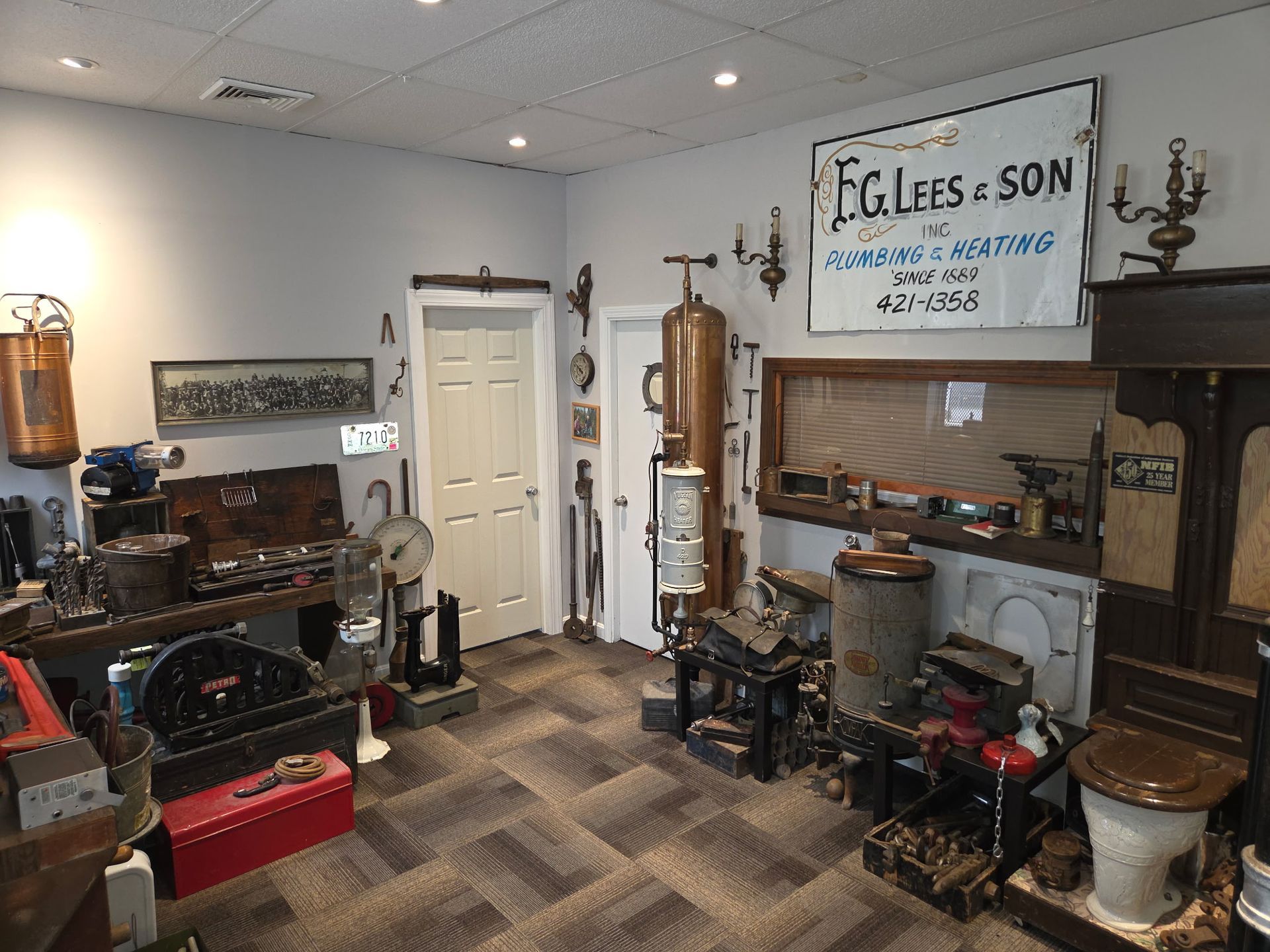
F.G. Lees & Son has been serving Rhode Island homeowners and commercial properties since 1889. We're a fifth-generation family business, and water line repair and replacement has been part of our work for as long as the company has existed. We carry our own excavation equipment, we pull our own permits, and we stand behind every job we complete. If you're dealing with water pressure loss, a high water bill with no clear cause, or concerns about lead pipe in an older home, call us. We'll tell you exactly what you're dealing with and what it takes to fix it.