
Oil-to-Gas Conversion Services in Rhode Island
Natural gas has consistently cost less per BTU than heating oil in New England — and a completed conversion eliminates delivery scheduling, price volatility, and the ongoing liability of an aging oil tank. F.G. Lees & Son has been converting Rhode Island homes from oil to gas for generations, managing every step of the process under one roof.
If you've been watching oil prices swing every winter and wondering when the right time to switch is, the answer is almost always: before next heating season. We run the numbers for you before any commitment is made — current oil usage, projected gas equivalents, and available Rhode Island Energy rebates — so you know your payback period before you decide.
Why Rhode Island Homeowners Are Making the Switch
Heating oil prices in New England are among the most volatile in the country, subject to global supply disruptions, delivery surcharges, and seasonal demand spikes that have nothing to do with your home's actual heating needs. Natural gas, delivered through a fixed utility line, removes that exposure entirely.
No More Deliveries. No More Price Swings.
Once your home is on natural gas, your fuel supply is continuous and utility-regulated. There are no delivery windows to schedule, no minimum order requirements, and no risk of running out on a cold weekend. For most Rhode Island homeowners, the reduction in annual heating costs alone begins recovering the conversion investment within a few years.
Oil Tank Decommissioning — Handled
An aging oil tank — whether above-ground in a basement or buried in the yard — carries real environmental and insurance liability. Many homeowners don't realize that a leaking underground tank can result in soil remediation costs that far exceed the value of the heating system itself. We decommission and properly dispose of your oil tank as part of the conversion project. You don't need to find a separate contractor for tank removal.
Rhode Island Energy Rebates Can Reduce Your Net Cost
Rhode Island Energy offers rebates for qualifying high-efficiency gas heating equipment, including condensing boilers and high-efficiency furnaces. We're familiar with these programs and help customers identify which incentives apply to their project before installation begins. The rebate reduces your out-of-pocket cost and shortens the payback timeline on the full conversion.
How the Oil-to-Gas Conversion Process Works
Converting from oil to gas involves several coordinated steps, and the process can feel opaque if you've never done it. Here is exactly what happens from the first call to the final inspection.
- Step 1 — Gas Availability Check: We confirm that a natural gas main is accessible at your property. In most neighborhoods throughout Providence, Warwick, Lincoln, and East Providence, gas infrastructure is already in place. If a service line needs to be extended, we coordinate directly with the utility.
- Step 2 — Utility Coordination: We work with Rhode Island Energy to establish your gas service account and schedule the utility-side connection. This step is handled by us — you don't need to navigate the utility process on your own.
- Step 3 — Equipment Selection: Based on your home's size, existing distribution system, and heating load, we recommend the right gas boiler or furnace. We install high-efficiency condensing equipment where the home can support it, including Navien systems for homeowners seeking maximum efficiency.
- Step 4 — Oil Tank Decommissioning: Your existing oil tank is drained, cleaned, and removed or properly abandoned in place according to Rhode Island DEM standards, with all documentation provided.
- Step 5 — New System Installation: The new gas heating system is installed, connected to your existing distribution — baseboards, radiators, or ductwork — and tested before we leave.
- Step 6 — Permits and Final Inspection: We pull all required permits and coordinate the inspection with your local municipality. Every conversion we complete is fully permitted and code-compliant.
What We Need to Know Before We Can Give You a Number
Every oil-to-gas conversion in Providence RI is a different project. Square footage, existing distribution type, tank location, and distance from the gas main all affect the scope and cost. We gather this information upfront — either over the phone or during a site visit — and provide a clear, itemized quote before any work begins.
You don't need to know what equipment you want or how the process works before calling us. That's our job.
Common Questions About Oil-to-Gas Conversion in Rhode Island
How long does an oil-to-gas conversion typically take?
Most residential conversions are completed in one to three days once the utility connection is in place. The utility scheduling timeline varies — Rhode Island Energy typically takes one to four weeks to process a new service connection — so the full project from first call to working heat is generally four to eight weeks.Will I need to replace my radiators or baseboards when I convert?
In most cases, no. A gas boiler connects to your existing hot water or steam distribution system. If your radiators and piping are in serviceable condition, they stay. We assess the distribution system during our site visit and flag anything that needs attention before installation begins.What happens to my oil tank — do I have to deal with that separately?
We handle oil tank decommissioning as part of the conversion project. Whether your tank is above-ground in the basement or buried outside, we drain it, clean it, and remove or properly abandon it according to Rhode Island DEM requirements. You receive documentation of proper disposal.How much can I save by switching from oil to gas?
Savings depend on your home's heating load and current oil usage, but natural gas has historically cost 30–50% less per BTU than heating oil in New England. We provide a side-by-side cost comparison before you commit, factoring in your actual usage history and any applicable Rhode Island Energy rebates.Is a permit required for an oil-to-gas conversion in Rhode Island?
Yes. A conversion involves new gas line work, mechanical equipment installation, and in most cases oil tank removal — all of which require permits and inspections. We pull every required permit and coordinate the final inspection. No work is left uninspected.
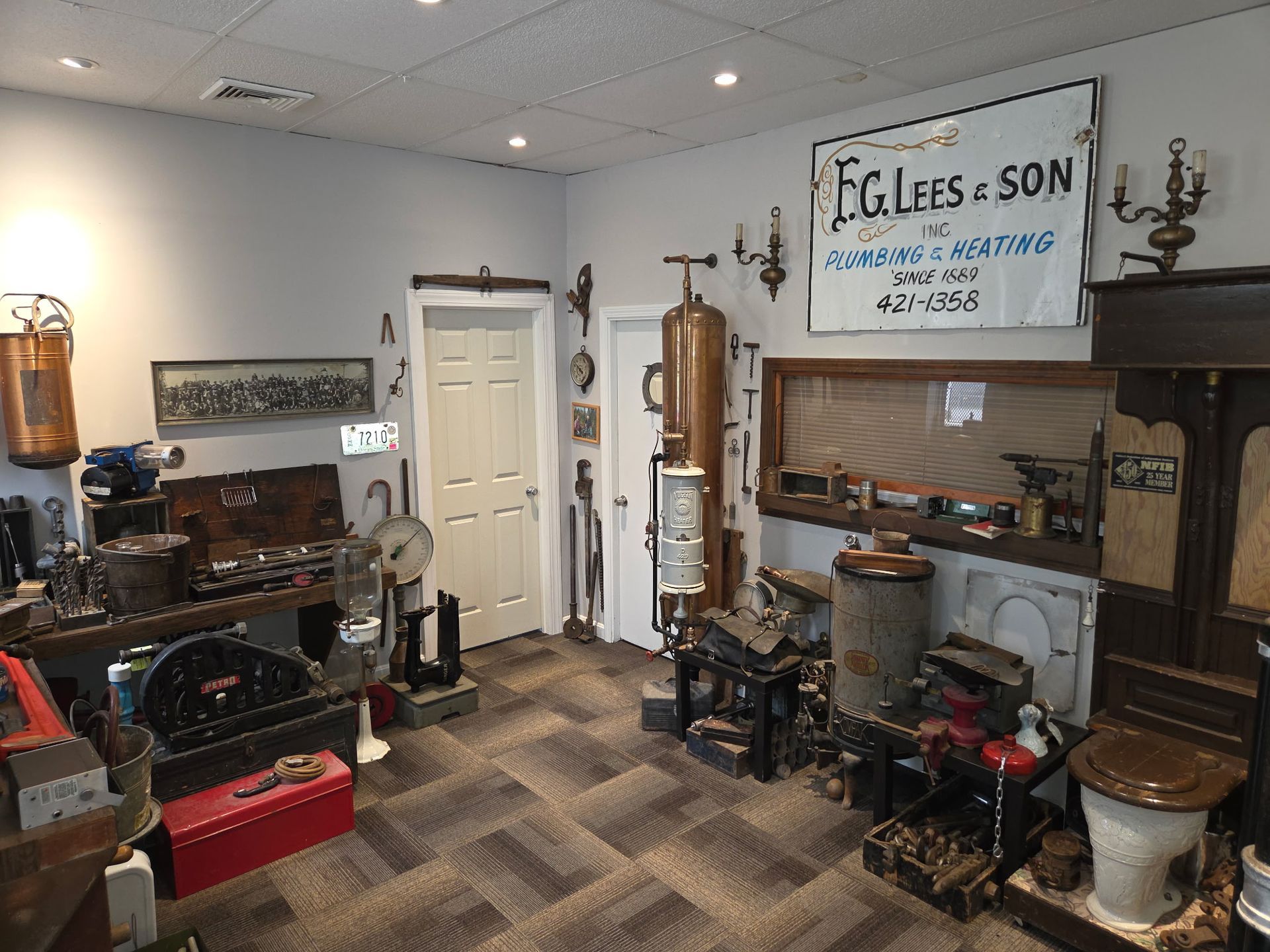
Rhode Island's Oldest Plumbing and Heating Company — Since 1889
F.G. Lees & Son has been serving Rhode Island homeowners and commercial properties since 1889. Five generations of the same family. More than 130 years of licensed, permitted work across the state. When you call us for an oil-to-gas conversion, you're working with a company that has completed more heating system transitions than most contractors in this state have attempted.
We are Better Business Bureau accredited and hold a 4.5-star rating across more than 70 Google reviews. Our work is verified through RealWork job documentation. If you want to see what our customers say about us, our reviews speak for themselves.